PHINIX: Perceptive Helper with Intelligent Navigation and Intuitive eXperience
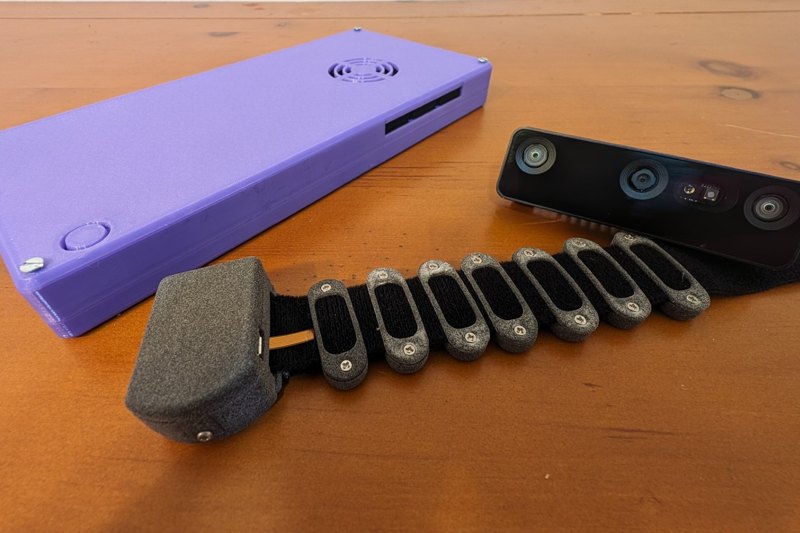
Photo: Ximira
PHINIX is an Intel-funded AI wearable from Ximira that helps blind and low-vision people navigate, read text and recognize faces on their own. AI cameras capture the surroundings in 3D, AI analyzes the scene, and PHINIX tells the wearer what matters through audio and haptic feedback. The software is open source, built on ROS 2.
My role
As Ximira’s haptics engineer, I took PHINIX from parts to a working wearable: I prototyped and assembled the hardware, and designed and 3D-printed parts for it, including pieces of the haptic bracelet. I designed the audio and voice interface that tells the wearer what the system has found, wrote software for its open-source ROS 2 stack that the team built on, and demoed PHINIX at CES 2024, where it won PC Pro’s Best of CES.
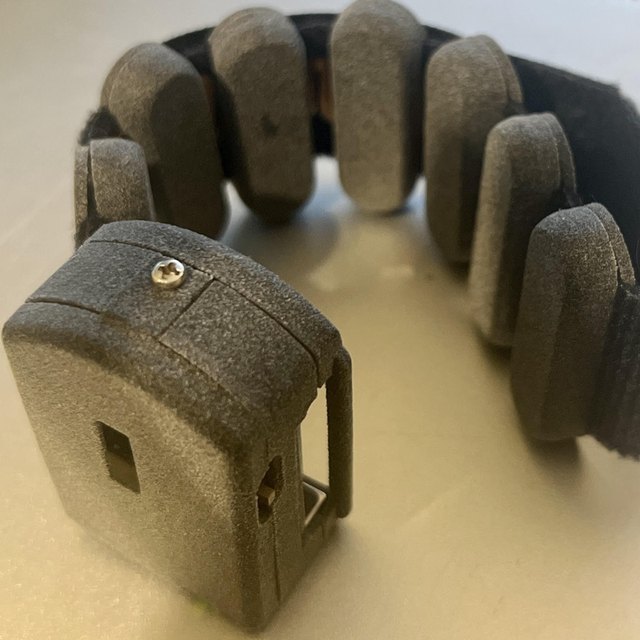
The haptic bracelet. Photo: Ximira
How it’s built
A Luxonis OAK-D Pro depth camera worn on the chest connects to a computing hub in a backpack, built around a Framework laptop mainboard with a 12th-gen Intel Core i7. Audio reaches the wearer through a bone-conduction headset, so their ears stay open to the world, and the haptic bracelets pair vibration motors with an IMU. The software runs on Ubuntu and ROS 2, with OpenVINO, DepthAI and OpenCV for detection and Vosk for speech.
Recognition
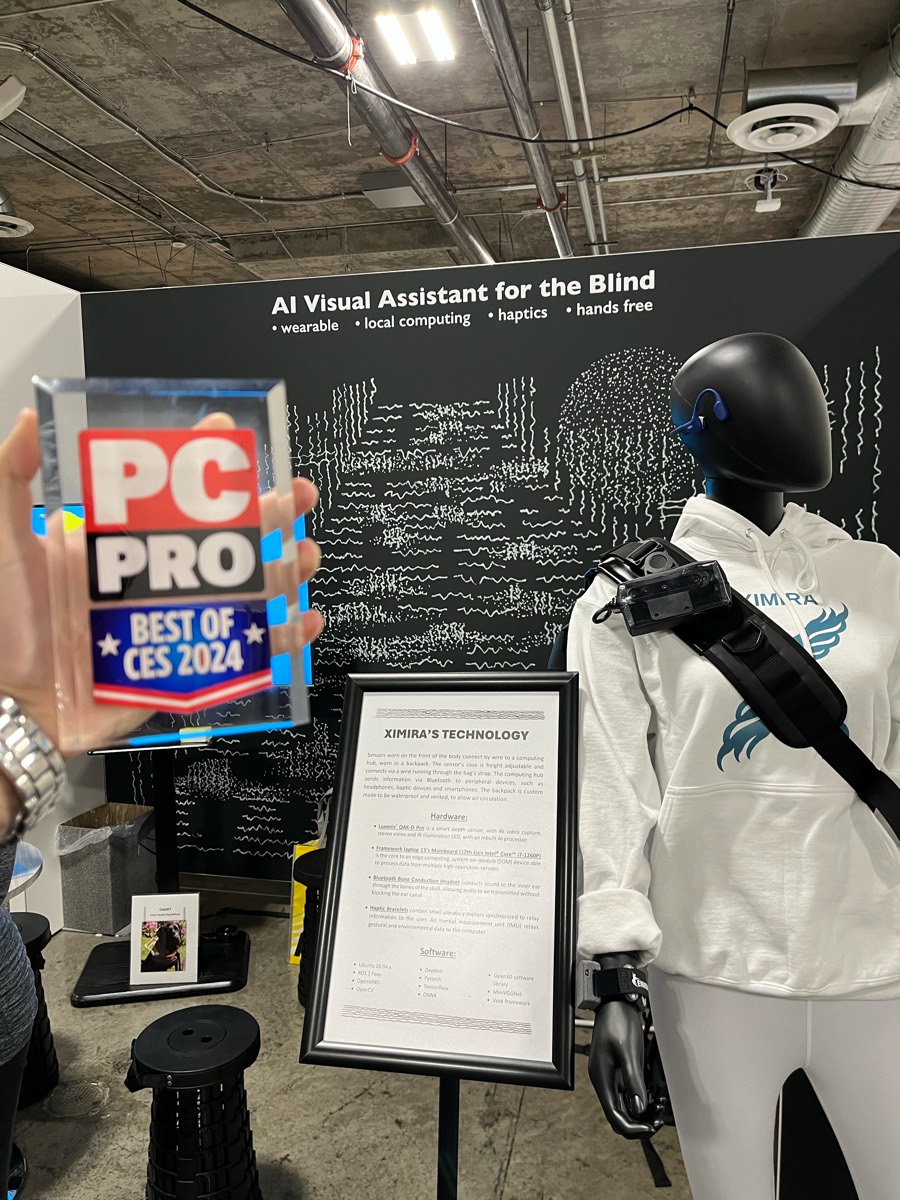
PHINIX won PC Pro’s Best of CES 2024.
Videos
Demo videos: Ximira, from the PHINIX repository